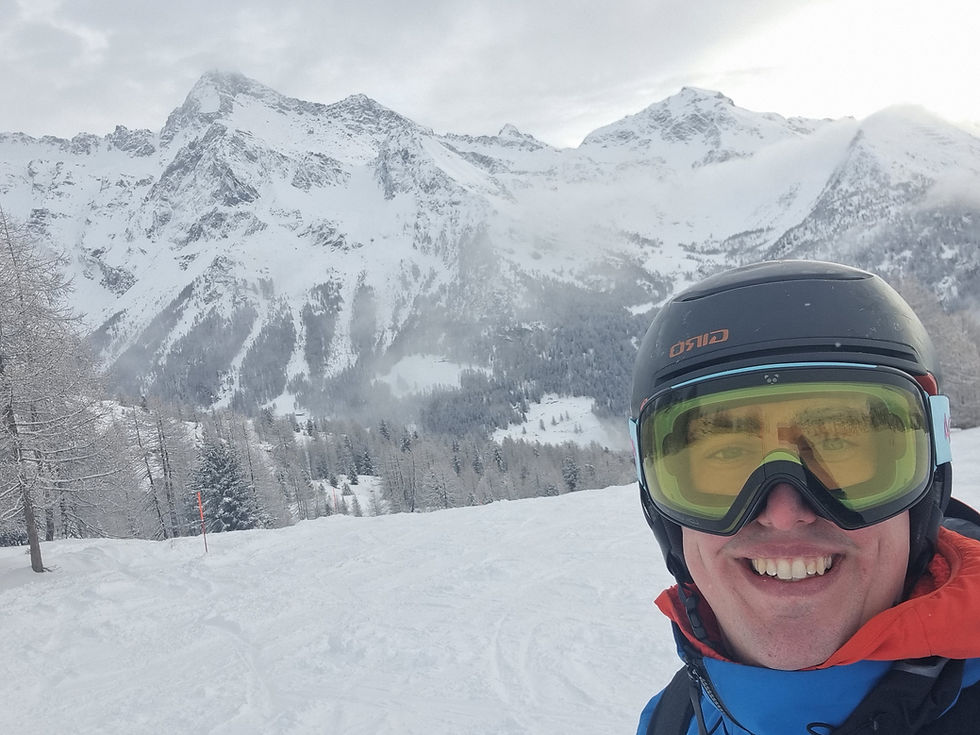
Season Diary - Day 12

Thursday 29th January 2026 - Champoluc, Italy
In defence of the UK ski industry
I spoke a fair bit about how tight-knit the ski industry is after the New Year’s tragedy in Crans-Montana, where people who are there to just have fun now have to bare witness and carry this tragedy with them for a long, long time.
This is the last full day of testing on the 2026 Ski Test, and coming away from it all I am struck once again by the camaraderie and familial bonds created between those in the industry.
I am but a baby in this world. Many of my colleagues on the testing side of it have been around for ages, and I know that many of the brand reps have been on the scene for twenty to thirty years. Listening in on conversations at SLIDE a couple of weeks ago I overheard reps asking their colleagues about their children – now leaving school or graduating university – and sharing tales of their times together when they were born!
Reps have worked for each other and for every brand under the sun, bouncing between companies before setting up their own ones and employing the next generation to do just the same.
But this is an odd industry, too. It is very boot-first, as most British skiers tend to buy their own boots but keep renting skis – the cost of the skis themselves and the extra cost of getting them to and from the mountains, plus tuning and servicing fees, means it is rarely financially cost effective to buy your own skis. It’s something you have to really want.
So the British market is boot-led, something that is far more easily transportable to the Alps and back again, and doesn’t require extra outlay beyond the initial spend.
And British skiers like buying boots. Around 60,000 pairs are sold every year, a small chunk of the million-or-so hardcore “skiers” who go every year, plus around three million extra who call themselves “skiers” but don’t go every year. Add that up over the perhaps 10-year lifespan of a boot, and that’s a hell of a lot of boots for a hell of a lot of skiers.
But the percentage of that 60,000 sold by retailers associated with Snowsports Industries of Great Britain – the retail trade body responsible for this Ski Test, SLIDE, and representing the interest of the UK ski retail market, has been declining and declining and declining.
SIGB retailers are losing out to discount “euros”, European-based online-only retailers who have a nasty habit of slashing prices and running finer margins but higher quantities. And this is doing the damage to the UK market.
There are so many reasons as to why it’s a bad idea to buy boots online rather than in a shop; boot purchasing is an experience, a process, something that takes an afternoon but leaves you set up for the next decade of your skiing life. Buy online and there is a very real risk of getting the wrong boot for you, and that will hurt your feet and your shins and your ankles for the next few years instead.
And believe me when I say, there is a vast wealth of experience in the UK ski industry. These boot fitters that I shared a bottle or two of wine with on test are involved in the design meetings of some of the major ski brands – they know what they are talking about so much that brands come to them for advice, not the other way around. Up and down the country there are boot fitters and ski techs and shop assistants who stand ready to help you find the next pair of boots, next skis, or next ski jacket. And they are all really good at what they do.
Yes, buying boots in store can be more expensive. But with your hard-earned cash you can keep a little slice of the UK ski industry going, and in return you’ll get the right pair of boots for the next decade of your skiing life. I call that a bargain.